
In This Article
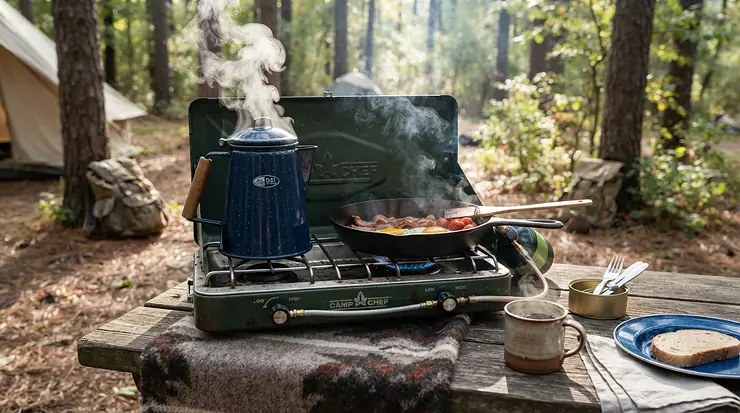
Pack a small SUV for a weekend and you learn fast that cargo space is a currency. The cooler takes the first big chunk. The tent grabs the second. Sleeping bags quietly colonize whatever is left. Somewhere in that negotiation, your camp kitchen has to earn its seat. That is why choosing a compact two burner camp stove for small SUV trunk loading is a different shopping problem from picking the “best camp stove” in the abstract.
Here is the twist most roundups miss: the winner is rarely the stove with the biggest BTU number. It is the one whose packed dimensions leave room for the bin of cast iron you refuse to leave home without. Based on the spec comparison across the seven stoves below, closed footprints run from a 10.3 x 7.2-inch Jetboil system to a 25.2-inch-long Camp Chef. That gap of more than a foot and a half is the difference between “slides in sideways” and “goodbye, camp chairs.”
This guide does three jobs. It translates every spec into what it means when you are staring at a hatch full of gear. It compares the stoves feature by feature, using price ranges only, because retail prices drift constantly and you should check current pricing before buying. And it adds the practical material product listings skip: how to pack, how to cook safely near a vehicle, and which stove suits which kind of camper.
One note on sourcing. Specs come from manufacturer and retailer listings gathered during late-2026 research, and review commentary reflects aggregated reviewer themes, not hands-on testing. Listings sometimes disagree with each other, so gaps are flagged rather than guessed.
What Is a Compact Two Burner Camp Stove for Small SUV Trunk Use?
A compact two burner camp stove for small SUV trunk use is a propane-fueled tabletop cooker with two independently adjustable burners that folds into a slim case, typically under about 25 inches long. It trades extreme heat output and giant cooking surface for packed dimensions that fit alongside coolers, bins, and bags.
Why bother with propane and two burners at all? Because two burners are what turn camp cooking from “survival” into “dinner.” One pan handles the main event while the other keeps coffee water or a side dish moving. Stoves also fit the low-impact camping ethic: Leave No Trace guidance points campers toward lightweight stoves as the lower-impact alternative to building a fire.
Three terms matter throughout this guide. Packed dimensions are the closed length, width, and height you actually need to find room for. Fold-flat legs are stands that tuck away instead of sticking out. A carry handle (or case) is what makes a 10-to-12-pound box feel manageable when you are hauling it from a hatchback to a picnic table. Everything below is judged through those three lenses first, and raw power second.
Quick Comparison: 7 Stoves by Packed Dimensions and Weight
Sizes below come from retailer and manufacturer listings. Where listings disagree, the range is noted.
| Stove | Packed dimensions (L x W x H, in) | Weight | Burner output | Best For |
|---|---|---|---|---|
| Jetboil Genesis Basecamp System | 10.3 x 7.2 (packed; height not listed) | 9.1 lb (excl. regulator, windscreen, bag) | 2 x 10,000 BTU | Smallest trunk footprint |
| Primus Tupike | 18.7 x 11.6 x 3.2 | About 9.5 lb | 2 x 10,200 BTU | Slim profile, upscale cooking |
| Coleman Fold N Go | About 13.5 x 12 x 5.5 | About 8.5–9 lb in most listings | 2 x 10,000 BTU | Budget-friendly, shortest fold |
| Eureka Ignite | 18.5 x 12.8 x 4 | 10 lb | 2 x 10,000 BTU | Low-profile all-rounder |
| Eureka Ignite Plus | 23 x 12.8 x 4 | 12 lb | 2 x 10,000 BTU | Two 12-inch pans |
| Coleman Triton+ | About 23 x 13.75 x 5.75 | About 11.9 lb | 22,000 BTU total | Value-priced power |
| Camp Chef Everest 2X | 25.2 x 12.7 x 5.6 | 12 lb | 2 x 20,000 BTU | Maximum heat |
Looking at the table above, the Jetboil Genesis Basecamp System is in a size class of its own, while the Coleman Fold N Go is the shortest conventional box. The Eureka Ignite and Primus Tupike share a similar 18-to-19-inch length but differ by about an inch in closed height, which can decide whether a stove fits under a stacked bin. The Camp Chef Everest 2X buys the most heat but also the longest footprint, so measure before you fall for its output.
💬 Just one click — help others make better buying decisions too!😊
Top 7 Compact Two Burner Camp Stoves for Small SUV Trunks: Expert Analysis
1. Jetboil Genesis Basecamp System — smallest packed footprint of the group
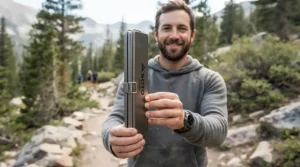
The clever bit is the nesting. The burners, 5-liter pot, and 10-inch fry pan collapse into one zippered bag that Jetboil lists at 10.3 x 7.2 inches packed, roughly the footprint of a large toolbox.
Two 10,000 BTU burners with a lever igniter and regulated flame control are the core. Listings show boil times of about 3 minutes 15 seconds per liter and a 9.1-pound system weight (excluding regulator, windscreen, and bag). Ten thousand BTU per burner is moderate heat, but regulated control means real simmering, and the 5-liter pot handles pasta for a crowd. The open footprint of 20.5 x 9.8 inches is friendly to a picnic table. Packed height was not published in the listings reviewed, so measure the bag before trusting a tight gap.
On paper, this is the pick when the trunk is the constraint and the budget is not. It suits two to four people on one-pot, one-pan menus. If you cook with two 12-inch skillets, the included 10-inch pan will feel limiting.
Reviewers at one outdoor retailer average 4.8 stars with about 97% recommending it across 63 reviews. They praise how neatly it packs. Recurring complaints include the lid melting when used over the skillet, regulator frustrations, and a few reports of early burner failures.
Pros:
- ✅ Packs into a bag smaller than most stove cases
- ✅ Includes 5-liter pot and 10-inch pan
- ✅ Fast boils with regulated simmer control
Cons:
- ❌ Lid reportedly warps over the skillet
- ❌ Highest cost of the seven
Expect the $350–$450 range. The value verdict: you are paying for packing efficiency and bundled cookware, which makes sense only if space is truly scarce.
2. Primus Tupike — slimmest profile with fold-flat legs
Where most stoves are boxes, the Primus Tupike is closer to a cutting board, with a closed height of only 3.2 inches and a length of 18.7 inches.
That thin shape comes with 11.6 inches of width and about 9.5 pounds of weight. Two 10,200 BTU burners have separate piezo igniters and flame knobs, and steel fold-flat legs lift the stove to a comfortable height before tucking away for transport. Side windscreens attach to the lid. The cooking surface is a modest 161.5 square inches, which one reviewer found sufficient for an 11-inch pan alongside the included griddle.
The analysis is straightforward: this is the stove for people who cook, not just reheat. Independent burners give real simmer range, and the legs mean you can cook on a low tailgate or a flat rock. A small-car reviewer noted that fitting it takes some thought, but that every inch saved matters. Check which fuel connection your regional version uses before buying a canister.
Reviewers consistently praise the build quality and design, and one gear site called it among the most portable rectangular two-burner stoves it had evaluated. The recurring caveat is price.
Pros:
- ✅ Only 3.2 inches tall when closed
- ✅ Fold-flat legs raise the cooktop
- ✅ Built-in windscreens and oak-trimmed handle
Cons:
- ❌ Smaller cooking surface than larger stoves
- ❌ Premium pricing relative to similar output
A specific US price range was not verifiable in the sources reviewed, so check current pricing. The value verdict: worth it if you cook seriously and prize slimness, not if you want the cheapest 20,000 BTU.
3. Coleman Fold N Go — shortest fold for the money
The Coleman Fold N Go pulls off the stove equivalent of a briefcase: burners side by side when open, a squat carry-on shape when closed.
Listings show a folded size around 13.5 x 12 x 5.5 inches, with weight at roughly 8.5 to 9 pounds in most listings (one retailer’s claimed weight is far lower, so trust the majority). It offers two 10,000 BTU burners, InstaStart piezo ignition, and room for two 10-inch pans. Because the footprint is nearly square, it slides into corners where long rectangular stoves cannot. The tradeoff is cooking room: two 10-inch pans is the ceiling.
Based on the numbers, this is the best bet for budget-conscious hatchback and compact-SUV campers who cook for two or three. One listing shows no built-in carry handle, though the maker sells a separate case.
On the maker’s site, the stove holds about 4.1 out of 5 stars across 65 ratings. Long-term owners describe a decade or more of service. Common complaints are weak wind protection and grease spreading beyond the stove body, so many users add a separate windscreen.
Pros:
- ✅ Briefcase-sized fold fits tight corners
- ✅ Two burners with piezo ignition
- ✅ Owners report very long service lives
Cons:
- ❌ Wind protection draws repeated complaints
- ❌ No integrated carry handle on some listings
Expect the $100–$180 range depending on retailer. The value verdict: the strongest “small footprint per dollar” option here.
4. Eureka Ignite — low-profile all-rounder for two 10-inch pans
The Eureka Ignite is the stove you buy when you want the dependable middle: 18.5 x 12.8 inches when closed, only 4 inches tall.
Specs include 10 pounds of weight, two 10,000 BTU burners, a push-button ignitor, simmer control, a stainless-steel drip tray, lid latches, and adjustable feet. Burner spacing is 10 inches, so two 10-inch pans fit. Listings cite roughly 90 minutes of burn time on a 1-pound cylinder. In practice, the low 4-inch profile slides under stacked bins, and the adjustable feet matter when your picnic table is not flat. It also supports Eureka’s JetLink hose system, though the Ignite must be last in any chain.
My read: this is the stove for couples and small families who want predictable behavior without paying premium-brand prices. The limitation is spacing. One owner noted that a big fry pan will not sit comfortably beside a medium pot, which is exactly why the Plus version exists.
One outdoor retailer shows a 4.7 average across 41 reviews, with reviewers calling it simple, sturdy, and well made.
Pros:
- ✅ Only 4 inches tall when closed
- ✅ Simmer control and stainless drip tray
- ✅ Adjustable feet for uneven tables
Cons:
- ❌ 10-inch burner spacing limits pan combinations
- ❌ Heavier than the Coleman Fold N Go
Expect the $125–$170 range. The value verdict: a safe, balanced pick for most small-trunk campers.
5. Eureka Ignite Plus — room for two 12-inch pans without a giant footprint
The Eureka Ignite Plus answers the original Ignite’s one real weakness by stretching burner spacing to 12 inches.
Closed, it measures 23 x 12.8 x 4 inches and weighs 12 pounds, with two 10,000 BTU burners, a push-button igniter, a simmer dial, and a stainless-steel drip tray. The extra length is the price of space for two 12-inch pans, which is a real advantage if breakfast involves a big skillet. The 4-inch closed height remains low, so it can still ride under bins, though a 23-inch length needs a clear lane.
Analytically, this is the stove for families of three to five, or for anyone who cooks with a large griddle. It is also the one where the length matters: measure your cargo floor before ordering.
Reviewers report it works well in windy conditions and holds simmer. One described its closed size as similar to an older Coleman but without the pan-size limits. The complaints are specific: one reviewer disliked the non-standard gas hose connection, and another said the latches do not hold the lid tightly.
Pros:
- ✅ Fits two 12-inch pans comfortably
- ✅ Low 4-inch closed profile
- ✅ Simmer dial and drip tray for easy control
Cons:
- ❌ Non-standard hose connection frustrates some owners
- ❌ Lid latches reported loose
Expect roughly the $150–$180 range. The value verdict: good value for families who outgrow 10-inch pans.
6. Coleman Triton+ — workhorse numbers at a mid-range price
The Coleman Triton+ is the “just works” option, pairing 22,000 total BTU with a closed size close to the Ignite Plus.
Coleman data lists roughly 23 x 13.75 x 5.75 inches and about 11.9 pounds (other listings vary, so verify). Two independently adjustable burners, InstaStart ignition, removable chrome-plated grate, and wind guards cover the essentials. It fits one 10-inch and one 12-inch pan, and burn time runs up to an hour on high per 16-ounce cylinder. The extra BTU means faster boils and better searing. The 5.75-inch height is the highest closed profile among the mid-range group, so measure vertical clearance.
My take: this is the practical choice for campers who want strong heat and a straightforward design without paying Camp Chef prices. A lifestyle write-up cited a 4.7-star average across roughly 3,500 Amazon reviews, and reviewers describe it folding neatly into a case. Retail listings elsewhere show lower averages near 4.2, so treat ratings as a range.
Pros:
- ✅ 22,000 BTU total for quick boils
- ✅ Fits a 10-inch and a 12-inch pan
- ✅ Wind guards and push-button ignition
Cons:
- ❌ Taller closed profile than the Eureka Ignite line
- ❌ Heavier than the Coleman Fold N Go
Expect the $100–$145 range. The value verdict: arguably the best performance per dollar if your trunk can absorb 23 inches of length.
7. Camp Chef Everest 2X — hottest burners, longest footprint
The Camp Chef Everest 2X exists for people who refuse to wait for water to boil.
It measures 25.2 x 12.7 x 5.6 inches and weighs 12 pounds, with two 20,000 BTU burners, a 215-square-inch cooking area, and matchless ignition. A 21.5 x 10-inch cooking grate and wind panels that clip into the body round it out. One gear review boiled a liter of water in just under four minutes and praised four full knob rotations from off to full, which gives unusually fine simmer control. A built-in carry handle makes the 12 pounds easier to haul. Fuel comes from a 1-pound cylinder via the included regulator adapter, or a larger tank by hose.
The honest analysis: the Everest is the best cooker here and the worst trunk fit. A reviewer noted it is not as compact as some two-burner rivals, and an editorial score of 7.8 out of 10 called it excellent for car camping but irrelevant to pack weight. Also note that an earlier generation (model MSHP) was part of a regulator-related recall, so buy the current model and verify its status.
Pros:
- ✅ Highest burner output of the seven
- ✅ Strong wind protection and fine simmer control
- ✅ Built-in carry handle
Cons:
- ❌ 25.2-inch length is hardest to place in a small trunk
- ❌ Costs more than most mid-range options
Expect roughly the $190–$230 range. The value verdict: worth it for cooking performance, but only if you have a lane for it.
How to Choose a Compact Two Burner Camp Stove for Small SUV Trunk Loading
Follow these seven steps and the shortlist narrows itself.
- Measure your cargo gap first. Record length, width, and height of the spot where the stove will ride. A hatch angle can cost you an inch you did not expect.
- Compare packed dimensions, not cooking area. A giant cooktop is a liability if the closed box does not fit.
- Match burner spacing to your pans. Ten-inch spacing suits two small pans; 12-inch spacing is for big skillets.
- Check built-in wind protection. Integrated panels save you from packing a separate windscreen.
- Look at how the stand works. Fold-flat legs and adjustable feet matter on uneven tables and low tailgates.
- Confirm the fuel connection. Make sure it uses the cylinder or hose setup you already own.
- Read the complaint patterns. One bad review means little; the same latch or regulator complaint repeated by many people means something.
Features That Actually Matter (And Those That Don’t)
Marketing sheets obsess over BTUs. Trunk packers should obsess over three other things.
Packed Dimensions
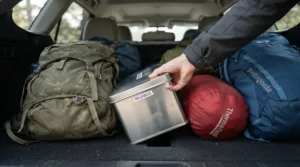
Packed dimensions decide whether a stove rides with you at all. Height is the most overlooked number: a 4-inch stove slides under a bin, while a 5.75-inch one may not. Always compare closed height as carefully as length.
Fold-Flat Legs
Fold-flat legs add table height without adding closed bulk. They matter most if your campsite table is wobbly or you cook off a low tailgate. A stove with legs that detach separately can be one more thing to forget.
Carry Handle
A carry handle, or a case, changes how a 10-to-12-pound box feels after two trips from the car. Listings show one on the Camp Chef Everest 2X and a handle accessory on the Primus Tupike. The Coleman Fold N Go listing shows none, though the maker sells a case. The Jetboil Genesis Basecamp System ships in a zippered bag.
Features That Matter Less
Past about 10,000 BTU per burner, extra heat shows up mostly as faster boils, not better meals. Linkable hose systems are nice but rarely used. And a bigger cooktop can be worse for a small trunk. Choose the smallest stove that fits your biggest pan.
Practical Usage Guide: Packing a Slim Two Burner Propane Stove for Tight Car Storage
A slim two burner propane stove for tight car storage only helps if you load it smartly.
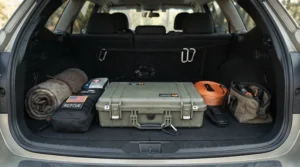
Packing order. Load heavy, flat items first. A low-profile stove such as the Eureka Ignite or Primus Tupike can ride flat on the cargo floor under bins. Put the stove where you can reach it without unloading everything, since it is the first item you will want at camp.
Fuel handling. Propane cylinders deserve separate care. The Propane Education & Research Council’s safety guide advises keeping cylinders upright and secured, driving straight to your destination, and not leaving them in a parked vehicle or trunk, where heat can build pressure. Pack cylinders where they cannot roll, and unload them first on arrival.
First-use checklist. Check hose and regulator connections with soapy water, never a flame, then confirm both burners ignite and hold a low flame.
30-day mistakes to avoid. Do not leave grease on the drip tray, since it becomes a fire risk. Do not lose the windscreen or grate pieces. And do not skip a dry run at home: setting up once in the driveway is far better than learning the latches in the dark.
Folding Two Burner Stove for Hatchback Camping: What Changes in a Smaller Cargo Area
A folding two burner stove for hatchback camping faces constraints SUV owners do not: lower ceilings, shared cabin air, and cargo that sits close to passengers.
Height becomes the most important number. Hatchbacks often leave less vertical clearance under stacked luggage, so the 3.2-inch Primus Tupike and the 4-inch Eureka Ignite line are easier to place than the 5.6-inch Camp Chef Everest 2X. The squat Coleman Fold N Go is a natural fit for the narrow cargo wells hatchbacks tend to have.
Ventilation and heat matter too. Because the cargo space is open to the cabin, keep any propane cylinder well secured and out of a sun-baked, closed car. Cook outside, well away from the vehicle, and never use the hatch opening as a makeshift shelter for the stove.
Finally, think about cleanup. A closed stove with a latched lid keeps grease off your sleeping bags, so lid latches and a drip tray carry extra weight in a smaller space.
Real-World Scenarios: Matching Stoves to Three Camper Profiles
The weekend couple with a compact crossover. Budget: modest. Environment: established campgrounds, tailgate cooking, two to three nights, about ten trips a year. The Eureka Ignite gives low-profile storage and simmer control, while the Coleman Fold N Go costs less and fits even tighter. Either works with two 10-inch pans.
The family of four on pancake duty. Budget: mid-range. Environment: car camping with kids, big breakfasts, a larger cooler, every trip a space fight. The Eureka Ignite Plus handles two 12-inch pans, and the Coleman Triton+ brings faster boils for pasta night. Both need a clear 23-inch lane, so plan the load around them.
The pair of hikers with a small hatch. Budget: higher. Environment: trailheads, dispersed sites, minimal cargo, cooking that is part of the trip’s joy. The Jetboil Genesis Basecamp System wins on packed size, and the Primus Tupike wins on slim design and cooking feel. Both reward people who cook often and carry little else.
Problem → Solution Guide for Trunk-Packed Camp Stoves
Problem: the stove will not fit alongside the cooler. Solution: choose by closed height and length, not cooking area. The Eureka Ignite or Coleman Fold N Go are the safest bets.
Problem: wind keeps blowing out the flame. Solution: pick a stove with integrated windscreens, like the Camp Chef Everest 2X or Primus Tupike, or pack a standalone windscreen if you choose the Coleman Fold N Go.
Problem: grease everywhere. Solution: use a stove with a drip tray and clean it before packing. The Eureka Ignite line includes one.
Problem: your big skillet will not sit next to the pot. Solution: move up to 12-inch burner spacing with the Eureka Ignite Plus, or use the skillet alone on one burner while a small pot sits on the other.
Problem: flame control is sloppy. Solution: favor stoves with fine knob travel, such as the Camp Chef Everest 2X, or regulated burners like the Jetboil Genesis Basecamp System.
Compact Two Burner Stoves vs Alternatives: What You Give Up and Gain
| Option | Typical packed size | Weight | Best For | Trade-off |
|---|---|---|---|---|
| Compact two-burner propane (this guide) | About 10–25 in long | About 8.5–12 lb | Real meals in small cargo areas | Needs propane and some table space |
| Single-burner propane (such as a Coleman single-burner model) | About 12.5 x 13.4 x 4 in | About 2.2 lb | Solo trips, backup | One pot at a time |
| Full-size legged cooker (such as Camp Chef Explorer) | Listed near 30 to 36 lb, 60,000 BTU | Heavy | Groups, tailgating | Hard to fit in a small SUV |
A single-burner stove is fine for coffee and freeze-dried dinners, but it forces you to cook sequentially. A full-size legged cooker offers enormous power and cooking area, but its weight and bulk work against a small trunk. A compact two-burner sits in the sweet spot, which is why it dominates car camping.
The environmental case also favors stoves. The Appalachian Mountain Club recommends packable, lightweight stoves over campfires in most cases because fires can leave lasting scars when built or maintained improperly. For campers who care about both minimal impact and a real dinner, a compact two-burner is the efficient answer.
Price Range and Long-Term Cost: What You Actually Pay
| Stove | Price range | What you get | Review signal | Best For |
|---|---|---|---|---|
| Coleman Fold N Go | $100–$180 | Briefcase fold, piezo ignition | 4.1/5 on maker’s site (65 ratings) | Budget small-space campers |
| Coleman Triton+ | $100–$145 | 22,000 BTU, wind guards | About 4.7 reported on Amazon (verify) | Value-seeking families |
| Eureka Ignite | $125–$170 | Low profile, simmer control | 4.7 at one retailer (41 reviews) | Balanced everyday use |
| Eureka Ignite Plus | $150–$180 | 12-inch pan spacing | Largely positive; latch and hose gripes | Larger pans |
| Camp Chef Everest 2X | $190–$230 | 40,000 BTU, windscreen, handle | 7.8/10 editorial score | High-heat cooks |
| Jetboil Genesis Basecamp System | $350–$450 | Stove, pot, pan, bag | 4.8 at one retailer (63 reviews) | Smallest packed size |
| Primus Tupike | Premium tier; check current price | Slim design, fold-flat legs | Strong build reputation | Design-minded cooks |
The table tells a clear story: the Coleman Triton+ and Coleman Fold N Go keep entry costs lowest, while the Jetboil Genesis Basecamp System charges a premium that includes cookware. The Eureka Ignite line sits in a comfortable middle.
Long-term cost is dominated by fuel and durability, not purchase price. Listings cite roughly an hour of high-heat cooking per 16-ounce cylinder, and a cylinder generally costs in the single-digit-dollar range, so a typical weekend uses one or two. Owners report decade-long service from simple stoves like the Coleman Fold N Go, while premium systems like the Jetboil Genesis Basecamp System carry more complaints about specific parts failing. Durability and warranty support matter as much as sticker price.
Common Mistakes When Buying a Compact Two Burner Camp Stove
Buying on BTUs alone. A 40,000 BTU stove that will not fit your trunk is useless. Measure first.
Ignoring closed height. Length gets all the attention, but a 5.75-inch stove can fail to clear a stack that a 4-inch stove would pass.
Assuming every pan fits. Burner spacing differs by two inches between the Eureka Ignite and Eureka Ignite Plus, and that gap decides what skillet you can use.
Overlooking wind protection. Stoves without built-in screens, like the Coleman Fold N Go, draw repeated complaints in breezy sites.
Skipping recall and model checks. An older Camp Chef Everest 2X model was part of a regulator recall, so buy the current version and confirm its status before first use.
Forgetting the fuel connection. Confirm cylinder and regulator compatibility before you leave the driveway, not after.
Safety, Ventilation, and Cooking Near Your Vehicle
The most important rule is also the simplest: never run a camp stove inside a tent, camper, or vehicle. The U.S. Consumer Product Safety Commission warns that people die every year from carbon monoxide poisoning linked to camping heaters, lanterns, and stoves used in tents, campers, and vehicles. Opening a flap or hatch does not make it safe.
For a trunk-based setup, that means cooking on a table or tailgate outside the cargo area, with the stove positioned well away from the vehicle’s open space and from flammable fabrics. Never leave a lit stove unattended, and keep it level and stable on a flat surface.
Fuel handling is the second half of safety. Keep cylinders upright, secure them so they cannot shift, and remove them from the vehicle soon after arrival instead of leaving them in a hot trunk. If you ever smell gas, shut off the fuel and move away from ignition sources before investigating. Check hose connections with soapy water at the start of each trip, and replace any cracked hose or damaged regulator immediately.
Frequently Asked Questions
❓ How big is a compact two burner camp stove when folded?
❓ Can I leave a propane cylinder in my trunk overnight?
❓ Is 10,000 BTU per burner enough for a family?
❓ What pan size fits a slim two-burner stove?
❓ Which compact stove is best for a hatchback with limited cargo height?
Conclusion: Pick the Stove That Fits the Space, Not the Spec Sheet
Choosing a compact two burner camp stove for small SUV trunk loading comes down to a single question: what do you lose when this box joins the pile? If space is the priority, the Jetboil Genesis Basecamp System and Primus Tupike shrink the footprint most, at premium prices. If budget matters, the Coleman Fold N Go and Coleman Triton+ deliver strong value. The Eureka Ignite and Eureka Ignite Plus offer the reliable middle, with 10-inch or 12-inch pan room. And if you want maximum heat and have a lane for it, the Camp Chef Everest 2X is the performance pick.
Whatever you choose, measure your cargo gap, check packed dimensions and closed height, and confirm your fuel connection before you pay. Then cook outside, keep cylinders secure, and enjoy the quiet satisfaction of dinner at camp.
Recommended for You
- Three Burner Camp Stove for Family Tailgating: 7 Best Picks 2026
- High Output Two Burner Stove for Cooking for Large Groups: 7 Best ’26
- Two Burner Propane Stove With Wind Guards for Windy Beaches: 7 Best
Disclaimer: This article contains affiliate links. As an Amazon Associate, I earn from qualifying purchases. If you purchase products through these links, we may earn a small commission at no additional cost to you.
✨ Found this helpful? Share it with your friends! 💬🤗
